Doctor of Medicine Reveals: A Herniated Disc Can Recover. Here's Why Yours Hasn't, No Matter What You've Paid For.
If you have a herniated disc and nothing you have tried has lasted, there is a hidden reason why. Read this short article before you do anything else.

Hi, my name is Dr. Whitfield, and I am a doctor of medicine from Columbus, Ohio.
I have spent over 30 years and more than 15,000 patient hours working with backs and spines.
Sciatica. Herniated discs. Bulging discs. Lower back pain. I have seen all of it.
Most of my patients had already tried physical therapy, injections, sometimes even surgery. And they were still in pain.
From mild stiffness, to a constant burning down the leg, to pain so bad you crawl to the bathroom in the morning.
But it was not until recently that I understood why so many of them never got better, no matter what we tried.
It started one night, while I was going through the clinical research on herniated discs.
I came across a study that stopped me cold.

The Real Reason Your Herniated Disc Hasn't Healed
Everyone knows the standard story.
Years of sitting and pressure wear the disc down. It herniates. It presses on the nerve. Pain shoots down the leg.
That part is true.
But here is what that story does not explain.
If you know what is causing the pain, why has it not gone away?
Why did physical therapy not fix it? Why did the cortisone wear off after a few weeks? Why has nothing lasted?
Here is what I realized that night.
Your disc is not broken beyond repair. A herniated disc can recover on its own.
In the published research, the body slowly reabsorbs the herniation in most cases. Roughly four out of five people improve without surgery, most within weeks to months.
So the question was never whether your back can heal.
The real question is why yours never got the chance.
And when I looked honestly at my own patients, the answer was uncomfortable.
Almost everything they had paid for was working against the very conditions a recovering back needs.

Why Nothing You Tried Worked
A recovering disc needs a few simple conditions.
The muscle around it relaxed, not locked. Blood moving through the area. Gentle movement, not total rest. And as little medication as you safely can.
Now look at what you have actually been given.
Physical therapy strengthens the muscles around the disc. Useful, but on a bad flare it can set you back. One patient online put it plainly: "Set me back really bad, almost to the beginning."
Cortisone shots calm the inflammation around the nerve. But the relief wears off, and they do nothing for the daily conditions. Another wrote: "Steroid injections just made me gain so much weight I feel even more useless."
Painkillers mask the signal so you can sleep. But masking pain is not the same as recovering.
The brace holds you still. On a bad day that helps. But a recovering back needs the opposite, to keep moving and keep the blood flowing.
Surgery can be necessary for real red flags. But it is invasive, it can carry risk, and a procedure cannot relax a muscle or keep you moving day to day.
None of them did the one thing a recovering back actually needs. None of them created the right daily conditions.

Here's Where It Gets Interesting
When a herniated disc finally gets the right conditions, something we have known for years can happen.
The body can shrink the herniation back on its own.
There is a well-documented process called spontaneous disc resorption. Larger herniations often reabsorb the most. The majority of people improve without ever needing surgery.
Patients sense it too. One wrote: "Only 10% of herniated discs require surgery. They seem to heal on their own within 2 years."
Your body has been capable of this the whole time. It just never got the conditions to do it.

But How Do You Actually Give Your Back Those Conditions?
That was my next question. And the honest answer is, it was never in one place.
Think of the muscle locked around an irritated disc like a fist clenched around a sore spot. Press on it and it clenches harder. It only eases when something gently lifts it open and warms it.
A back that is actually recovering needs four things working together.
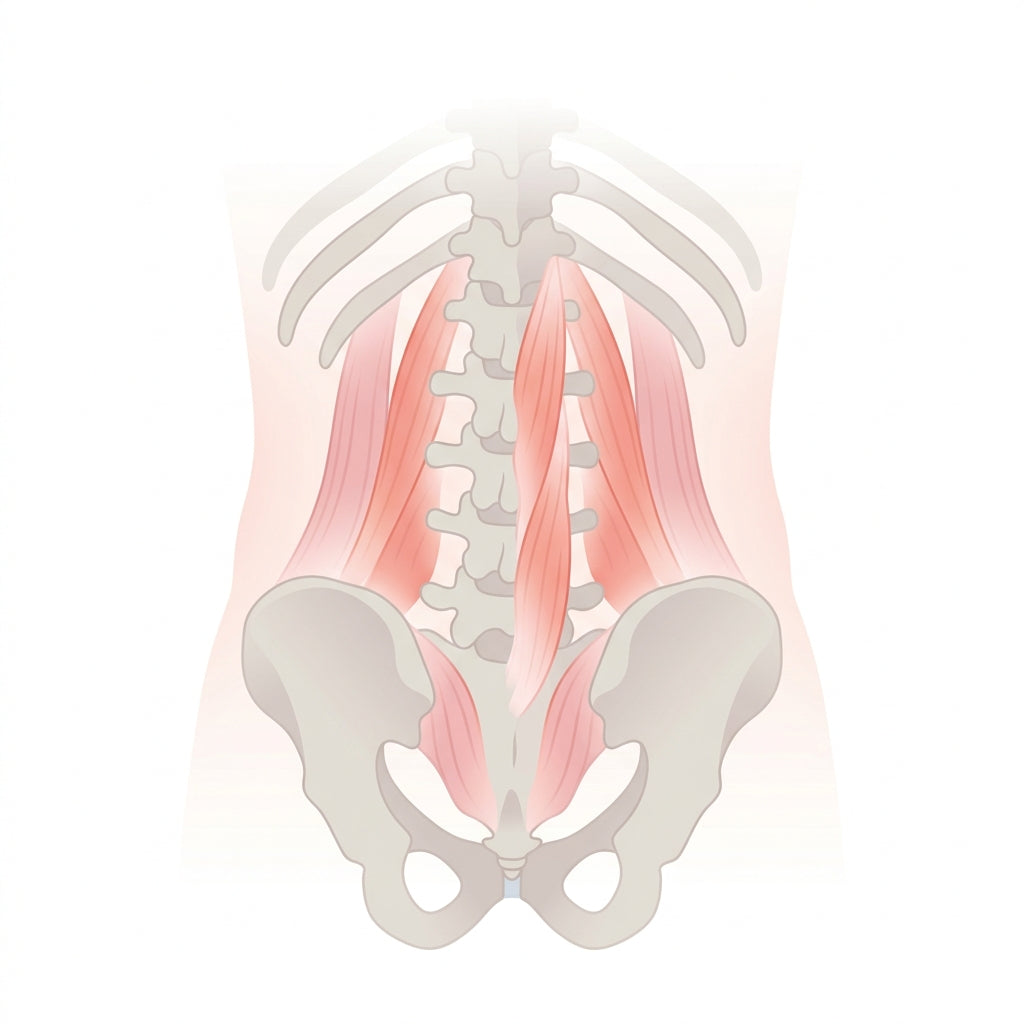 The locked muscle easedThe guarding muscle around the area has to let go, not get pressed down harder.
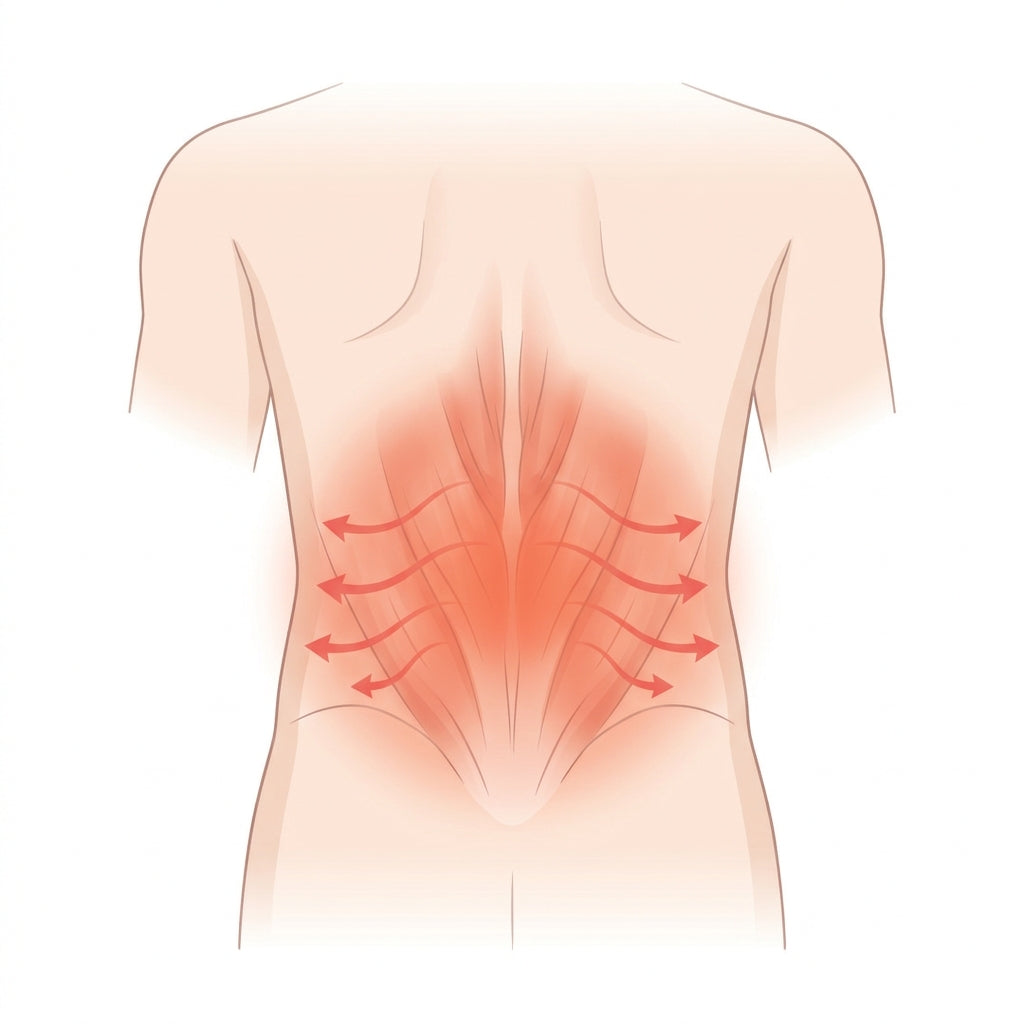 Local circulation supportedGentle warmth helps soothe the muscle and supports blood flow to the area.
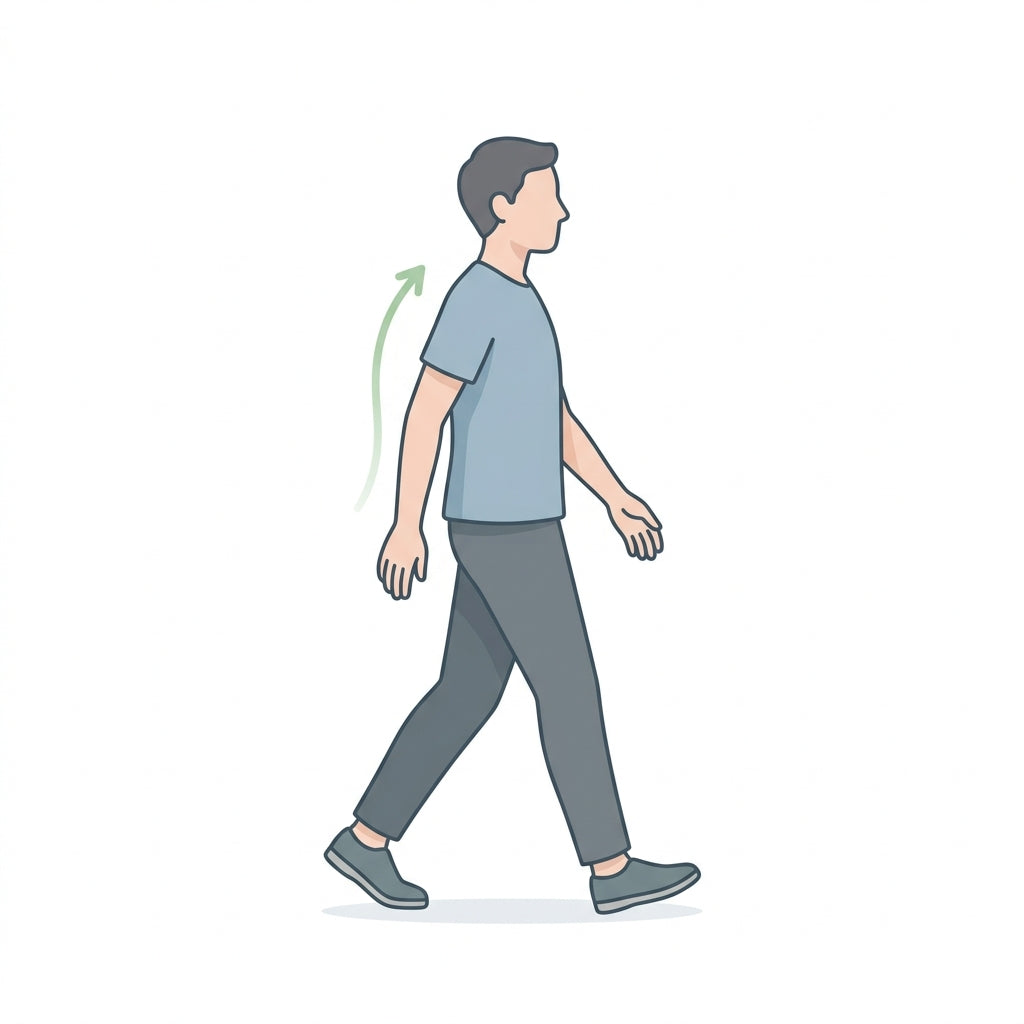 Gentle movement, not total restStaying gently active beats freezing up, which is what a brace and the couch quietly encourage.
 Drug-free, day after daySomething you can do daily without adding another pill to the pile.

The Four Therapies Clinics Already Use
Here is the good news. Each of those conditions already has a therapy that clinics use for it.

Suction, or cupping bodywork, used by bodyworkers and sports therapists, gently lifts the tissue so the guarding muscle can ease instead of being pressed harder.
Heat therapy, used in physical therapy, brings a soothing warmth to the area and supports local blood flow.
Red and near-infrared light, used in sports medicine and recovery rooms, to support local circulation and comfort.
Therapeutic vibration, used by therapists, works into the tight muscle on both sides of the spine to help it let go.
Each one helps a little. But on their own, scattered across different appointments, they never came together.
Getting all four meant booking three different clinics, copays and drives across town, thousands of dollars over months.
Introducing the Cordia Smart Cupper
So I went looking for a way to bring those four together, at home, in one short session.
That is when I found a small handheld device called the Cordia Smart Cupper.
It is the first at-home device I have seen that combines all four into a single 15-minute session, in the right order, from your couch.
Gentle suction, heat, red light, and therapeutic vibration. Working together.
They call it Lift & Unlock 4-in-1. It does not touch the disc, and it was never meant to. It does the daily conditions part the brace and the pills skipped.

How It Works
Here is what happens during a session.
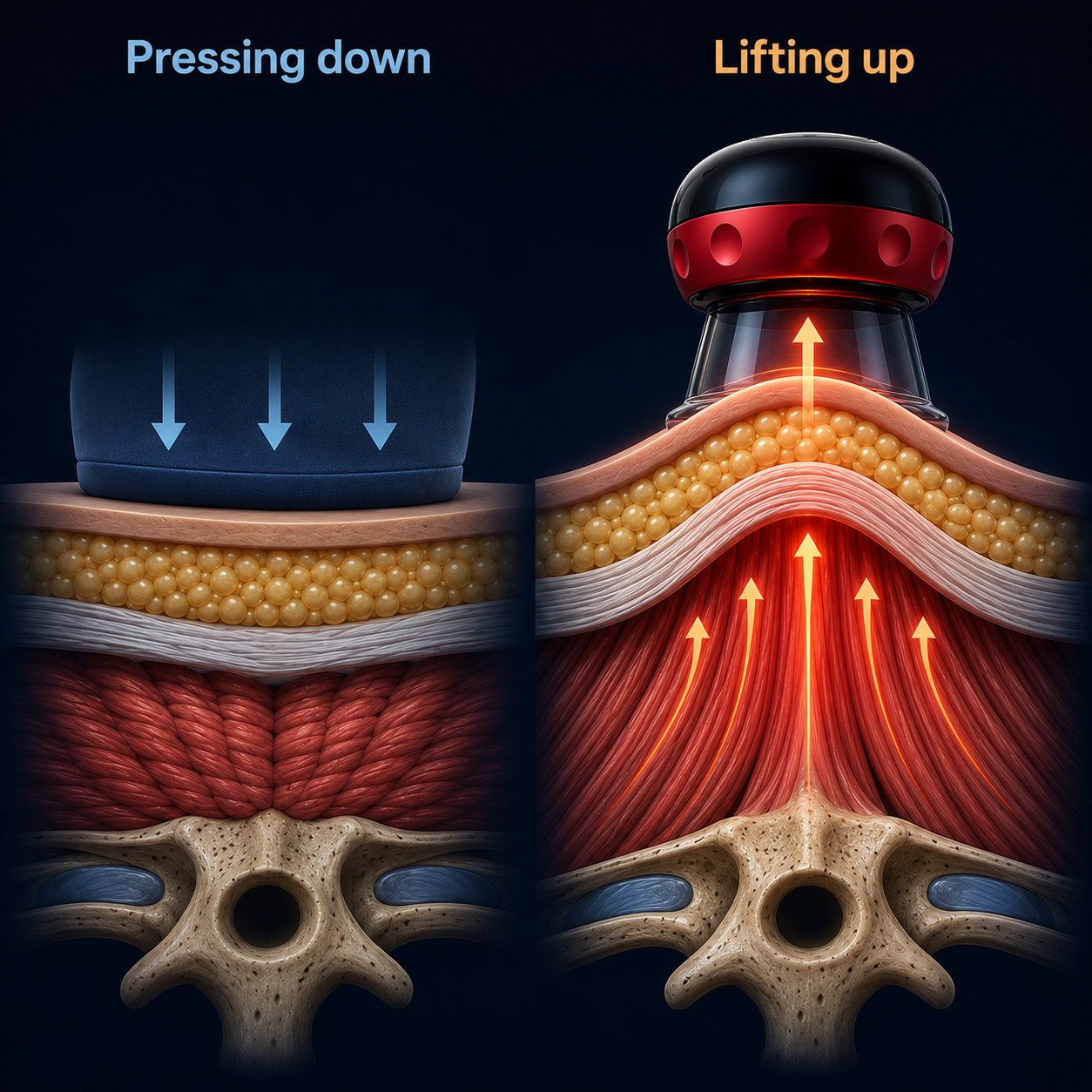 The LiftThe moment you place it on, gentle suction draws the tissue up instead of pressing it down, so the guarding muscle can ease.
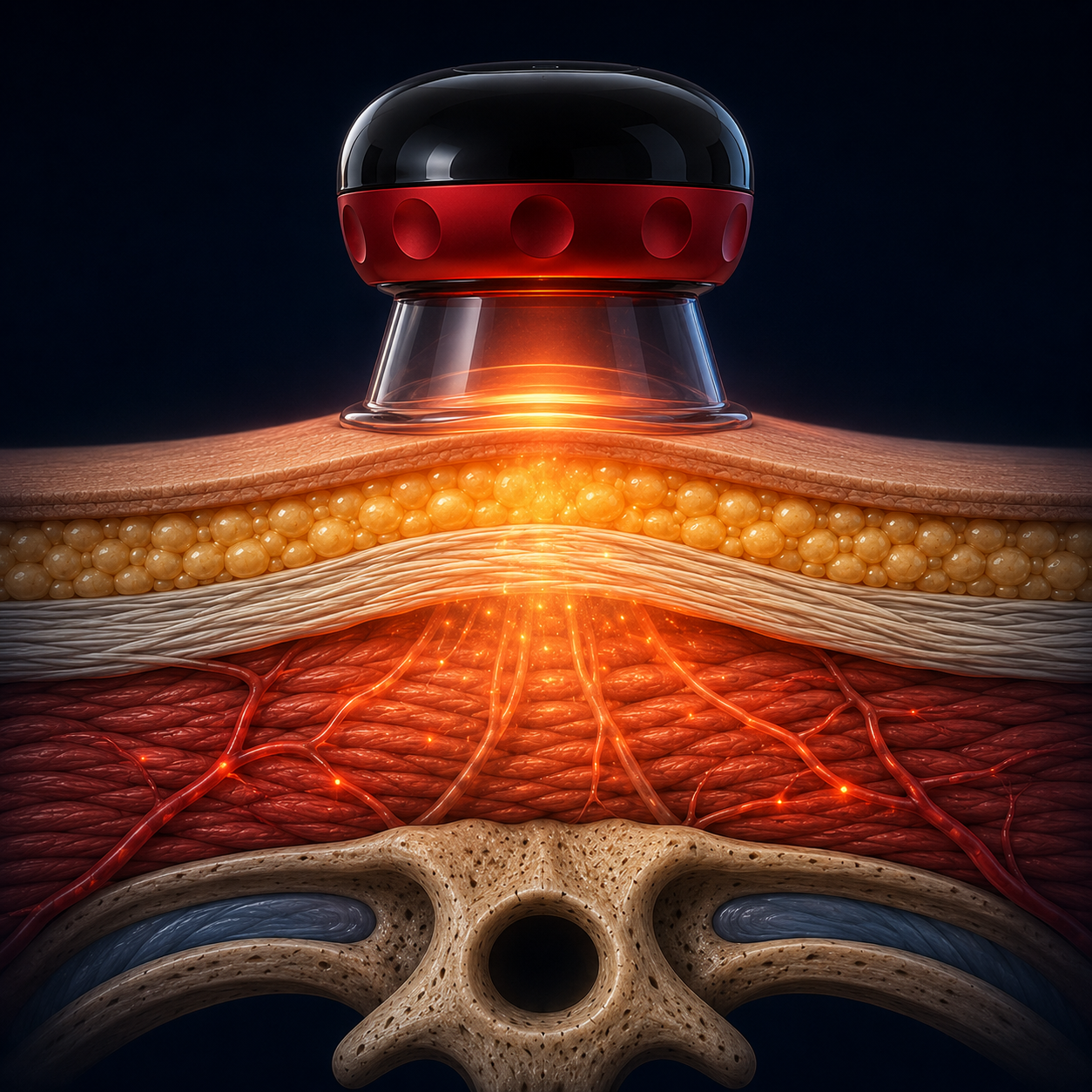 The Heat, about 122°FA soothing warmth spreads across your lower back and supports local blood flow into the area.
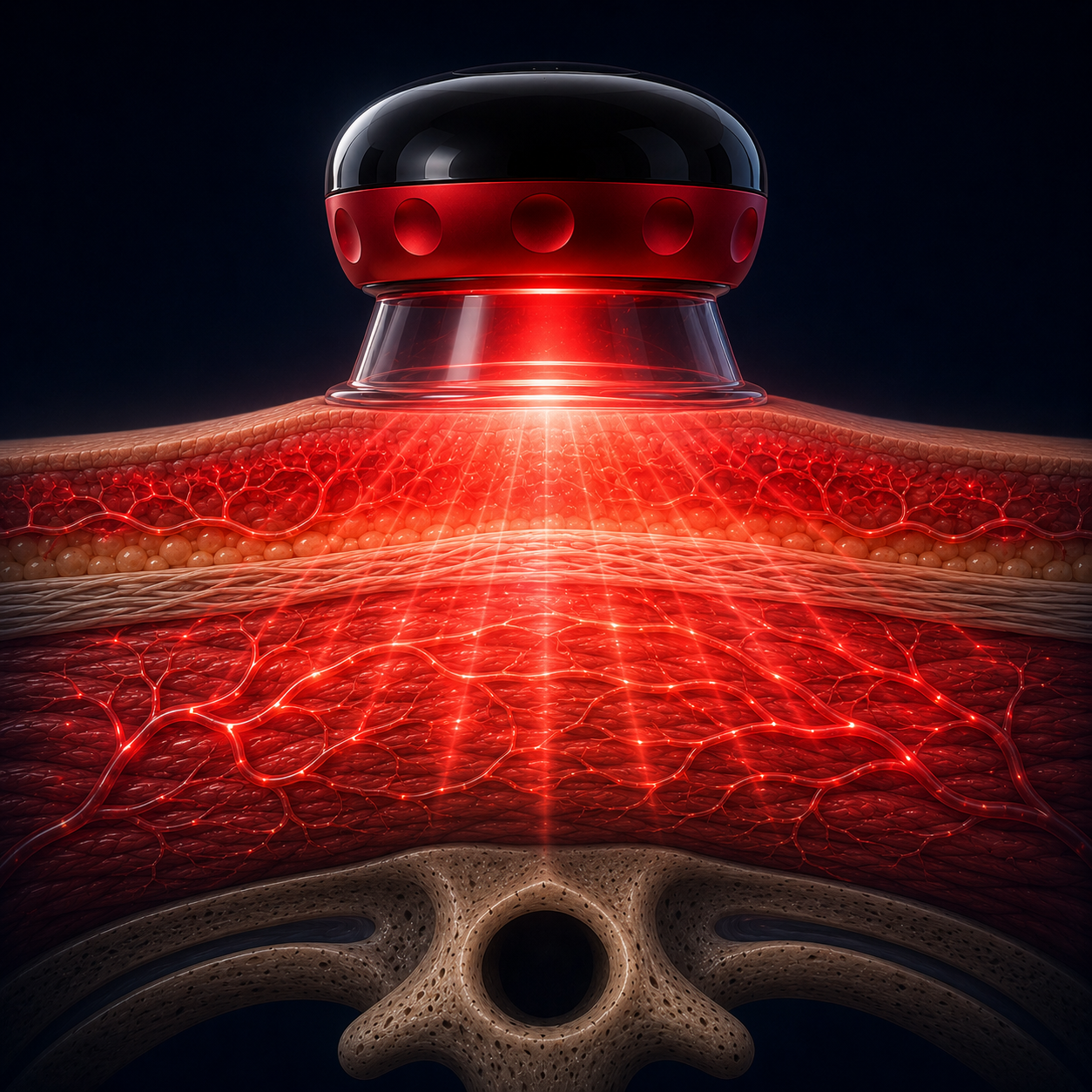 660nm Red LightThe same kind of LED wavelength that came out of NASA research, here to support local circulation and comfort while you use it.
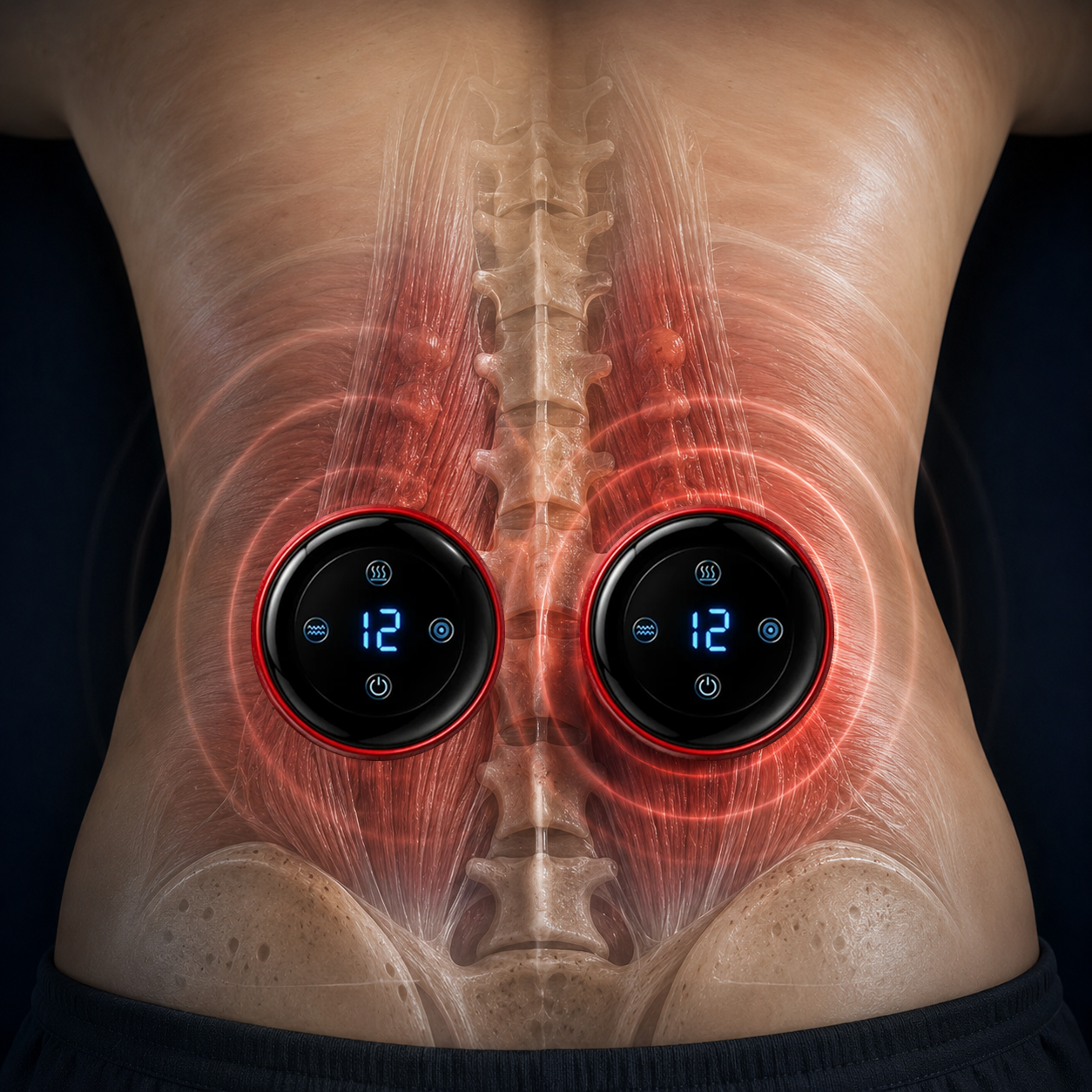 Therapeutic Vibration, 12 levelsA gentle pulse works into the muscle on both sides of the spine, helping the tension let go.
You just strap it on, press a button, and sit back for fifteen minutes.
Use it from the couch. While the TV is on. After work.
No appointment. No copay. Not a cure, and no honest device claims to be. Just the daily part, finally done.
You Are Not the Only One
In thirty years I have heard the same thing in a hundred different voices. You can find it on any back-pain forum tonight.
"Scared to get out of bed and would have to crawl around the house." · "I am afraid the rest of my life will be like this because of my age." · "Badly herniated discs, kinda ruined my entire life."
If any of that sounds like you, you are not broken and you are not alone. These are real people describing the same window you are in, the one where the right conditions matter most.

Real verified Cordia customer reviews load here. No ratings or testimonials are shown until they are real.
What the Research Says, and What It Does Not
I am a skeptic by training, so let me be honest in both directions.
The strong, well-documented part is the prognosis. Most herniated discs improve without surgery. The body reabsorbs the herniation over months in the majority of cases. Staying gently active beats total rest. That is in the published research, not a brochure.
The suction idea is old too. People have used cupping for roughly three thousand years, and you saw the round marks on Michael Phelps at the Rio Olympics in 2016. The honest part: research on cupping for back pain is mixed. Some studies show people feel better, others find it no stronger than a placebo. So I do not call this a treatment. It is a comfortable, drug-free way to support the conditions while your body does the actual recovering.

Imagine the Next Few Weeks
Just imagine.
❌ No more planning your whole morning around getting off the floor.
❌ No more lying awake at 2am trying to find a position that does not hurt.
❌ No more shifting around at the dinner table every two minutes.
❌ No more feeling like your back has quietly taken your life away.
That is what it looks like when your back finally gets the conditions it was missing.
And it takes about fifteen minutes a day to start.

What This Would Cost in a Clinic
Add up what you have already spent.
Physical therapy runs into the hundreds a month. Injections, hundreds each. Getting heat, suction and light therapy separately at clinics adds up to thousands over a year of appointments and drives across town.
You have likely paid more than that already, for relief that was only ever temporary.
The Cordia Smart Cupper is $69. One device, used as often as you like, from your own couch.

Try It Risk-Free for 30 Days
Guarantee
Here's What To Do Next
Click the button below. It takes you straight to the official Cordia page.
Choose your package, enter your shipping details, and you are done. Most people order in a few minutes.
Whatever you do, do not close this page telling yourself you will come back later.

The Questions Most People Ask First
Is this going to cure my herniated disc?
No, and do not trust anyone who says a handheld device can. It does not treat the disc or the nerve. It warms and helps relax the muscle around the area and supports local circulation, the daily, drug-free part, while your body and your doctor handle the rest.
Will it let me skip surgery?
That is a question for you and your doctor, and only them. Most people with a herniated disc do improve without surgery, but whether you are one of them is not something a device decides. If your doctor says you need an operation, listen to your doctor.
How is it different from a brace?
A brace holds you still. This does the opposite. It actively warms and eases the muscle and supports circulation for fifteen minutes, and then you take it off and move. One is passive, one is active.
Is it safe to use with a herniated disc?
Use it on the soft muscle of the lower back, not pressed against the spine itself, and check with your doctor first, especially if you are pregnant, take blood thinners, or are managing a diagnosed condition. A little temporary redness or a round mark can show up with cupping and usually fades within hours to a few days.
When should I see a doctor instead?
Right away for any loss of bladder or bowel control, numbness around the groin or saddle area, leg weakness that is getting worse, a fever, or pain after a recent fall. Those are emergencies. This is meant to complement real care, never to replace it.
So, What's It Going to Be?
I have spent over thirty years with sciatica and herniated disc patients. The ones who did best had one thing in common.
They stopped renting temporary relief, and started giving their back the conditions it actually needed.
Do nothing, and you already know how the next year feels, because you have lived it.
Buy one more thing that holds you still or numbs you, and you know how that ends too.
Or spend fifteen drug-free minutes a day on the part your back was missing. Thirty days. The risk is on us.
Your disc was never the real problem. It just never got the conditions. Give it those, and get yourself back.

Today's Offer
Try the Cordia Smart Cupper

- ✓ 4-in-1 Lift & Unlock: suction + heat (~122°F) + 660nm red light + 12-level vibration
- ✓ 3 interchangeable cup heads, USB-C cable and manual in the box
- ✓ 15 minutes a day, hands-free, drug-free, no flame
Most people choose the 3-pack at about $117, $39 a cup, one for the bedroom, one for the couch, and one to gift. A 4-pack runs about $175.
Comments